

On 13 October, Netflix bought the Spanish rights to the 2030 World Cup, an eagerly anticipated tournament co-hosted by Morocco, Portugal and Spain, the country that walked away victorious from the latest edition this summer.
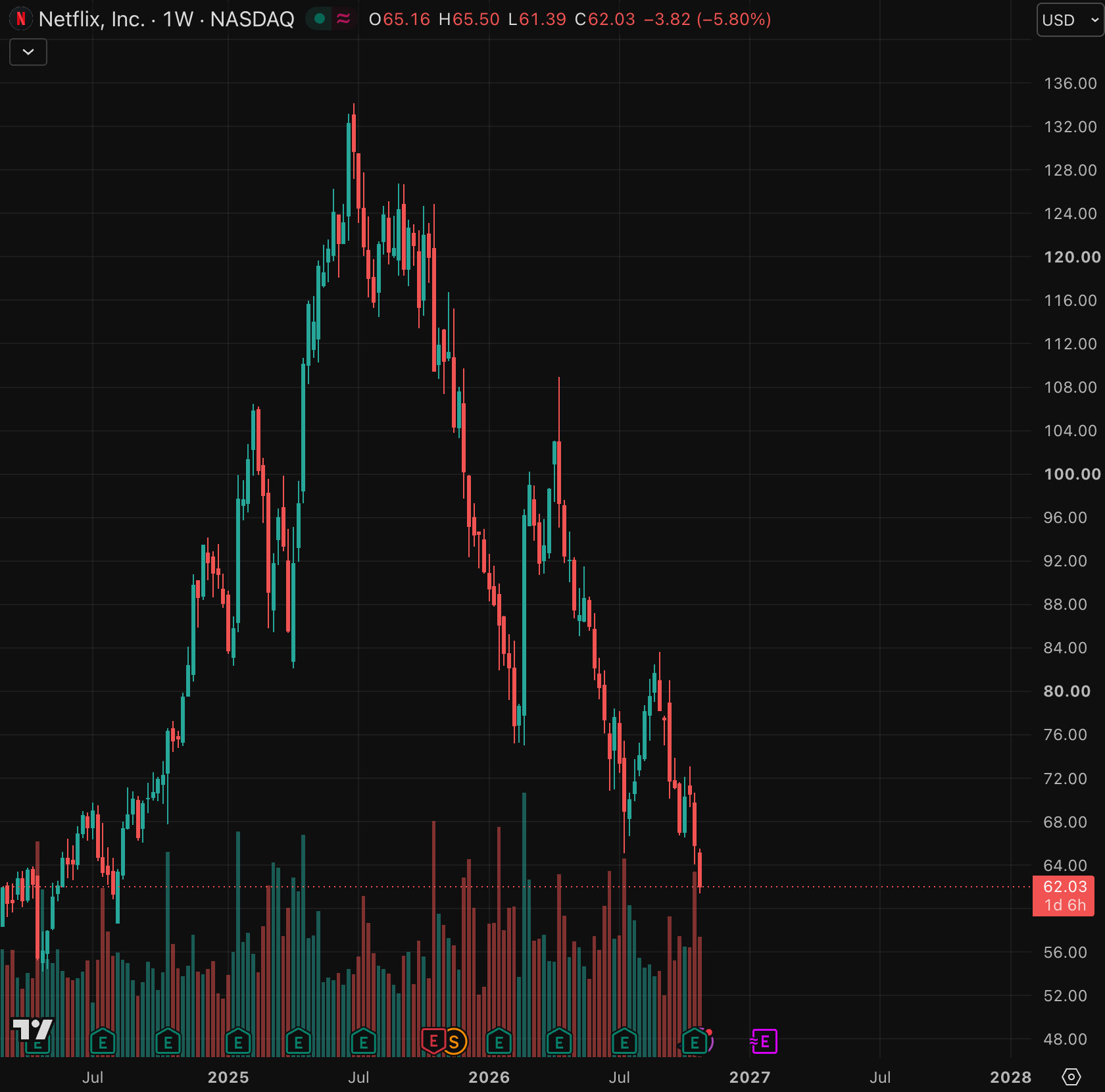
Eight days later though, its shares hit a two-year low.
Those two opposite moments capture the arguments surrounding Netflix at the moment. One camp has audaciously started asking whether this is the streamer’s Blockbuster moment. A business that defined an era, now losing the fight for attention to something faster.
The other camp claims that Netflix is aware of the problem and is already responding to it. Advertising, short-form video and live sport are all bets on growth beyond the scripted catalogue, and the World Cup is perhaps the boldest of them all.
A slowing machine
Before we dive into the World Cup deal, some context about where the company is now. Netflix stock fell to $65.30 the day after third-quarter results, down about 28% for the year and closer to 46% over twelve months. If 2026 ended at current prices, it would be the stock’s worst year since 2022, when shares fell 51%.
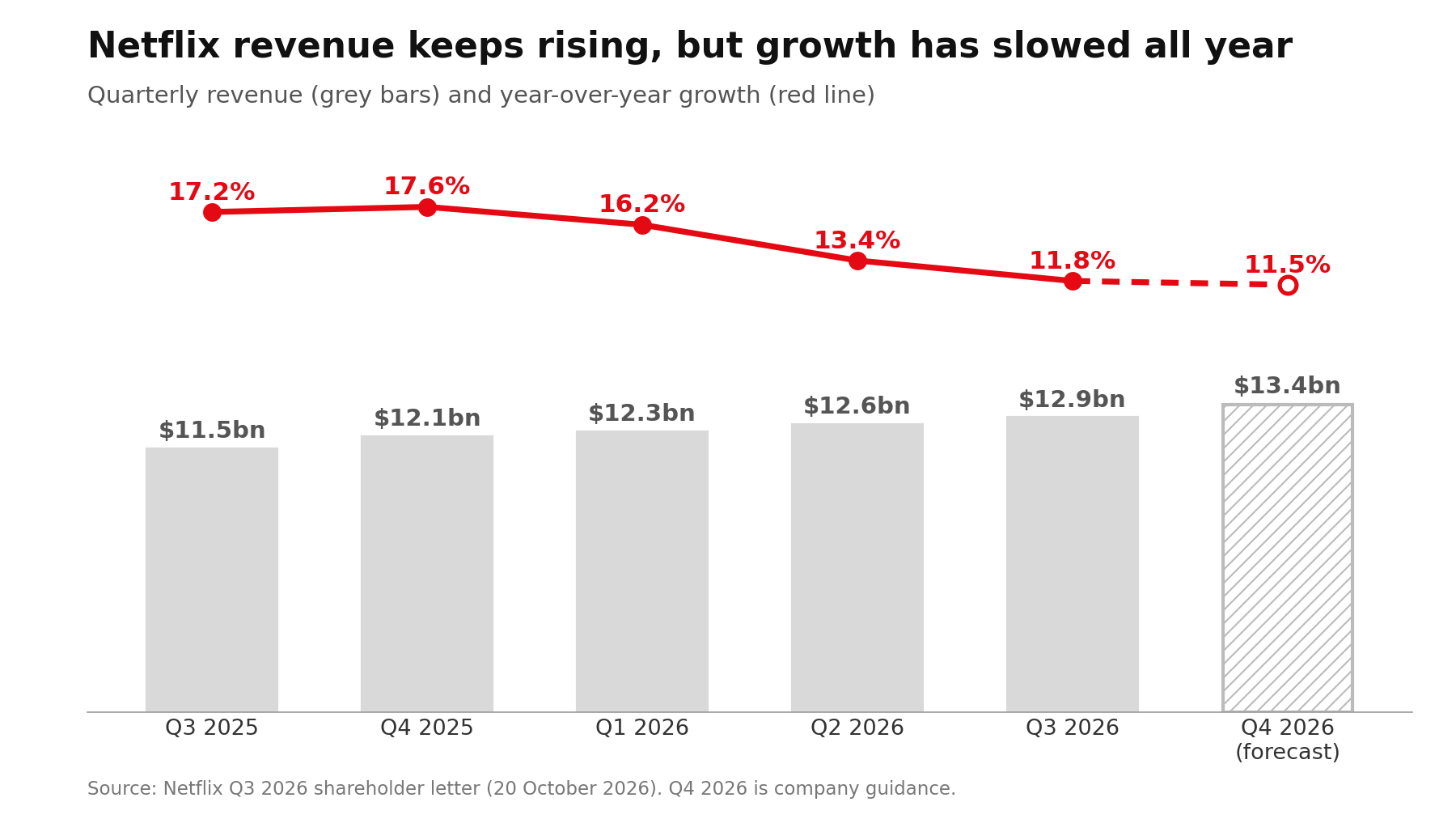
The funny thing is that the results were not a disaster by any means. Revenue rose 11.8% to $12.87 billion and operating income jumped 37%. What spooked investors was the direction of travel. Q4 guidance implies slowing growth compared to a year earlier, and ad revenue for 2026 is now expected at $2.7 billion, $300 million below the previous forecast.
The bull case, made by Bank of America, points to a stock at under 20 times earnings with more than 300 million paying subscribers, and argues the shares have fallen faster than the business. The bear case is sceptical about where the next phase of growth will come from.
The attention ceiling
The Blockbuster question (which is overstated and premature in my opinion) rests on that slowing growth line.
Netflix’s competition only partly comes from other streamers. The bigger threat comes from short-form video and worsening attention spans. Viewers increasingly prefer the dopamine hit from rapid cuts on IG Reels, TikTok and Shorts to episode-length shows. So the net-new buyer of an ever-pricier subscription gets harder to find, especially as Apple ushered in a new era of hardcore multitaskers.
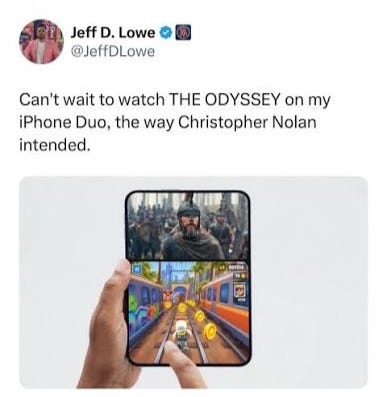
All jokes aside, YouTube is now the most-watched platform on US TVs, taking a record 15.8% of all TV viewing in August, according to Nielsen. And Netflix does seem to be worried by that as it is now developing short-form video of its own.
There is another (perhaps more worrying) constraint underneath. US media consumption sits at around 26 hours a week, drifting down since the lockdown peak. Recent growth has mostly come from consumers viewing and listening to things in the background, consuming content in the car or at a desk alongside something else.
So, if total attention has essentially topped out, every platform is fighting over a fixed pool. Something’s gotta give… and Netflix did concede that point in July, when its shareholder letter said “not all hours are equal”. Reed Hastings (Netflix co-founder and former co-CEO) famously said in 2017 that the company’s biggest competitor is human sleep. I guess we truly have arrived at that point.
Why live sport is different
That said, live sport is one of the few formats that sits outside that problem. A match demands the viewer’s attention at a set time. Admittedly, it can be backgrounded. I confess, I’ve watched too many Premier League matches with one eye while doing some chores and firing up Claude on the side.
While that is true, live sport can’t be saved for later without losing most of its value, particularly when watching with friends or family. A 30-second clip gives you the highlights but doesn’t quite capture the essence and emotion of witnessing a thrilling match in the moment. Live sport produces what the rest of the catalogue struggles to: a scheduled (often social) moment people will pay to be present for.
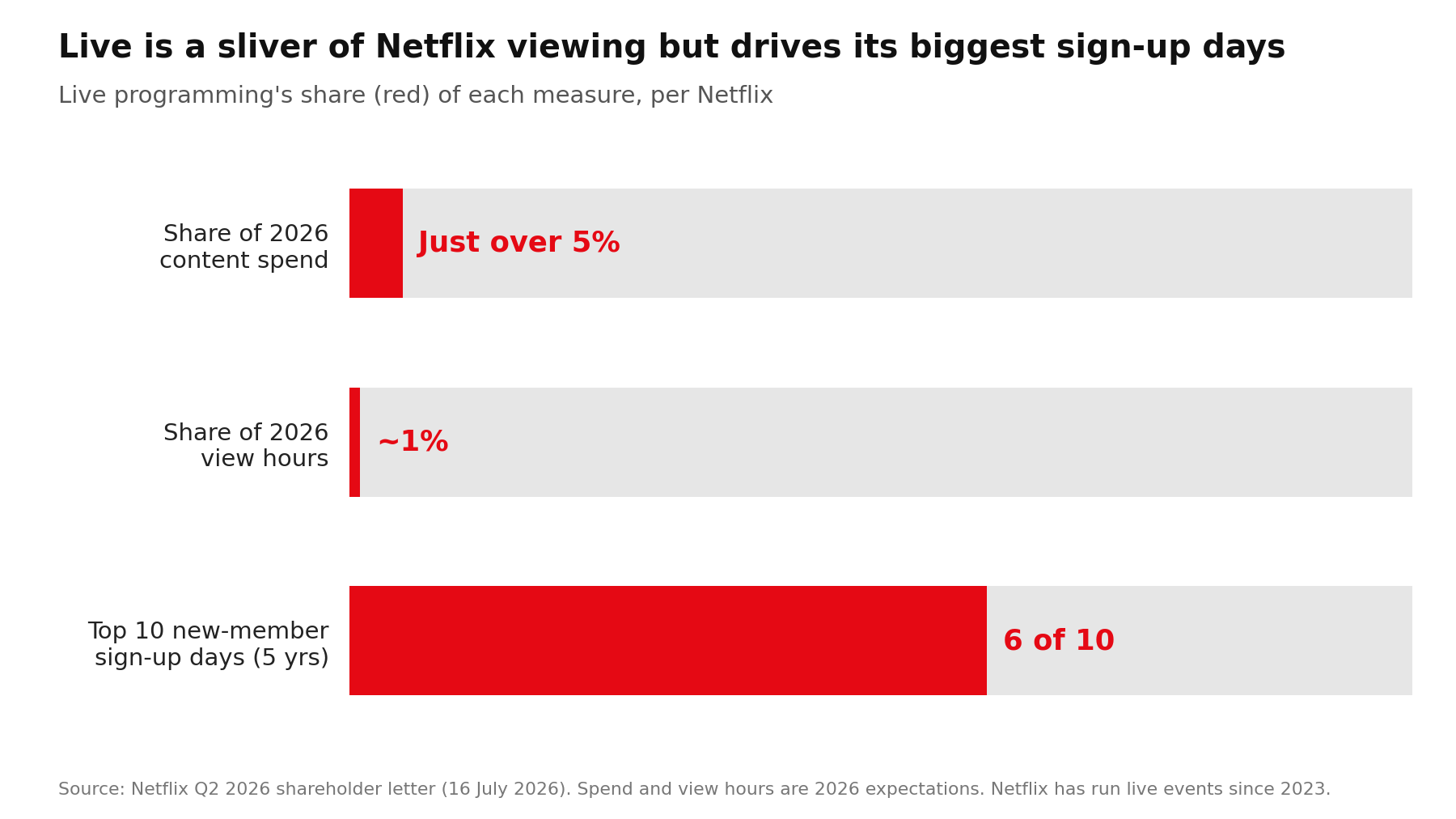
Netflix’s own numbers show that. It expected live events to take just over 5% of 2026 content spend while delivering about 1% of viewing hours. By the hours measure, that’s a poor deal. But by sign-ups, it’s quite the opposite. Six of Netflix’s ten biggest sign-up days in the past five years came from live events, and it has only been doing live since 2023.
Live audiences are also what advertisers pay a premium for, which matters even more now that the ad business is behind plan.
Europe’s streaming wars
Zoom out, and Netflix’s Spain & Andorra deal looks less like a one-off and more like part of a pattern that’s been building across Europe for a few years. The continent’s biggest sports rights are moving from pay-TV to streamers, but rarely in one piece. It’s an extremely fragmented space where rights are being sold country by country and are often shared.
Because live sports are one of the few remaining assets that guarantee enormous, real-time audiences and consistent subscription sign-ups, these rights are incredibly valuable.
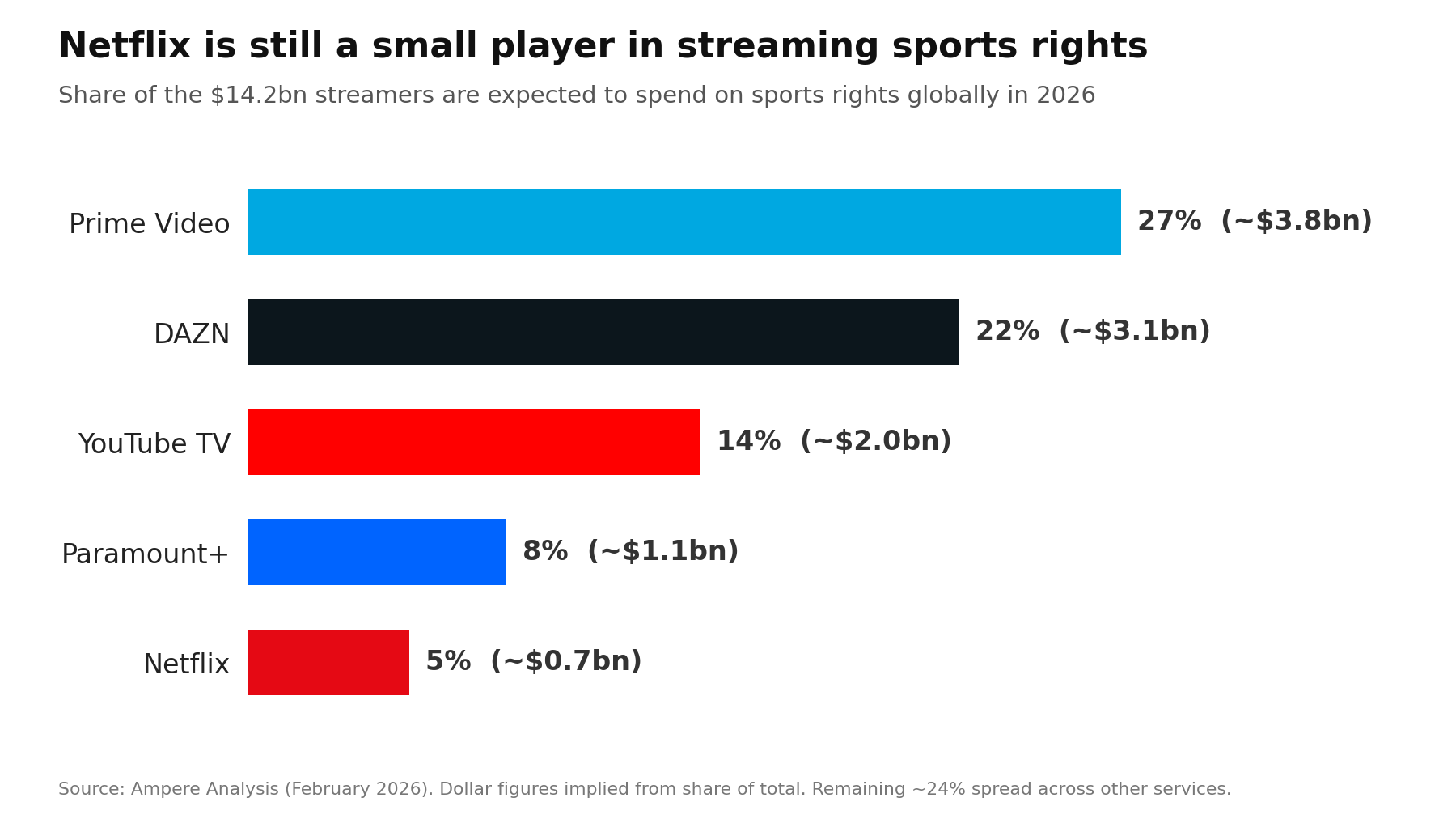
The money being spent shows just how valuable the shift has become. Streamers are expected to spend $14.2 billion on sports rights this year, with Prime Video now the biggest spender at 27%. Netflix, for all the recent headlines, sits on just 5%.
You can see the slicing almost everywhere you look. In Germany, Prime Video shares the Champions League with DAZN, picking up one match per matchday. It also renewed its Tuesday-night package across the UK, Ireland, Germany and Italy through 2031, reportedly beating Disney+ and, interestingly, Netflix. Even Paramount+, which takes over the Champions League in the UK and Ireland from 2027, is buying one market at a time.
The World Cup is Netflix’s first real slice of its own, and it’s a big one. Netflix will stream all 104 matches, the first time it has ever held rights to the men’s World Cup. It’s also landing in exactly the right market, with a home tournament and the defending champions playing in front of their own fans.
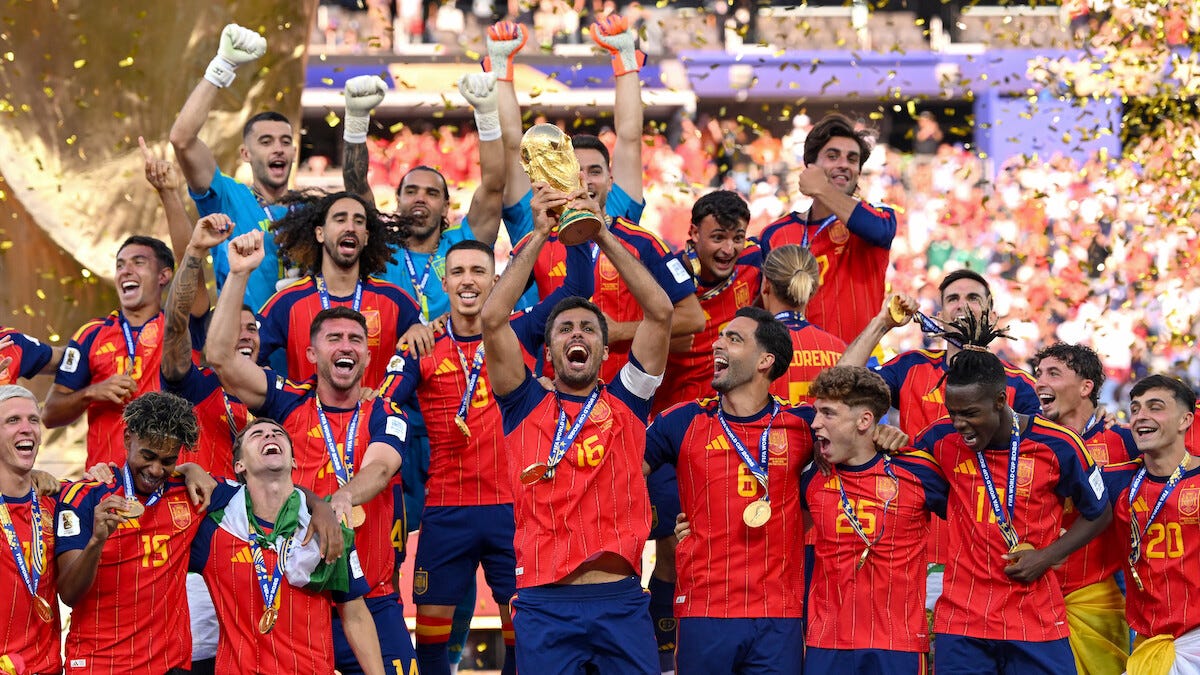
The only catch is that Netflix won’t be the sole place to watch some of the games. In Spain, one match every matchday will be free to watch, and every Spain game, both semi-finals and the final will also be shown on a free-to-air channel. At the end of the day FIFA also wants to ensure maximum reach and viewership. But it doesn’t change the fact that Netflix, for the first time, is itself a viable and user-friendly option to watch the entire tournament.
A very significant milestone. A home World Cup is the kind of sign-up moment Netflix can circle in the calendar four years out, and I’m sure they’ll be turning up the volume on it as we get closer to the opening game. And with Netflix’s ad tier live in Spain since 2022, every match comes with ad inventory to sell. Spain might just be the start, with Netflix reportedly lining up to challenge Fox for the US rights to the 2030 and 2034 tournaments. Watch this space!
So what?
So, is this Netflix’s Blockbuster moment? No.
Blockbuster’s mistake was refusing to change, and Netflix is doing the exact opposite. They are paying for the one kind of high-demand, authentic attention that cannot be manufactured. If attention really has hit a ceiling, live sport is one of the few places left to buy it in bulk, at a guaranteed time, with a large base of guaranteed viewers. That’s why a streamer with a sliding share price is happy to pay up for the Spanish rights, and keen to add more in the future.
The rights themselves keep changing hands. Europe sells them in slices, to whoever bids highest that cycle.
For founders and investors in sports tech who may not be dealing in these mega transactions, what also stays valuable by association is everything around the match that allows for smooth operations. We previously wrote a separate piece about the tech that allowed the 2026 World Cup to run (mostly) flawlessly. In short, just think of the tech that keeps a live stream standing up at national scale, the tech being used to support officiating decisions, and the tools that turn a 90-minute game into attention advertisers will pay for. Going forward, both sides of that coin, the rights and the tech built around it, will become increasingly important and interlinked.