

“Sleep is the greatest legal performance-enhancing drug that most people are neglecting.” — Matthew Walker
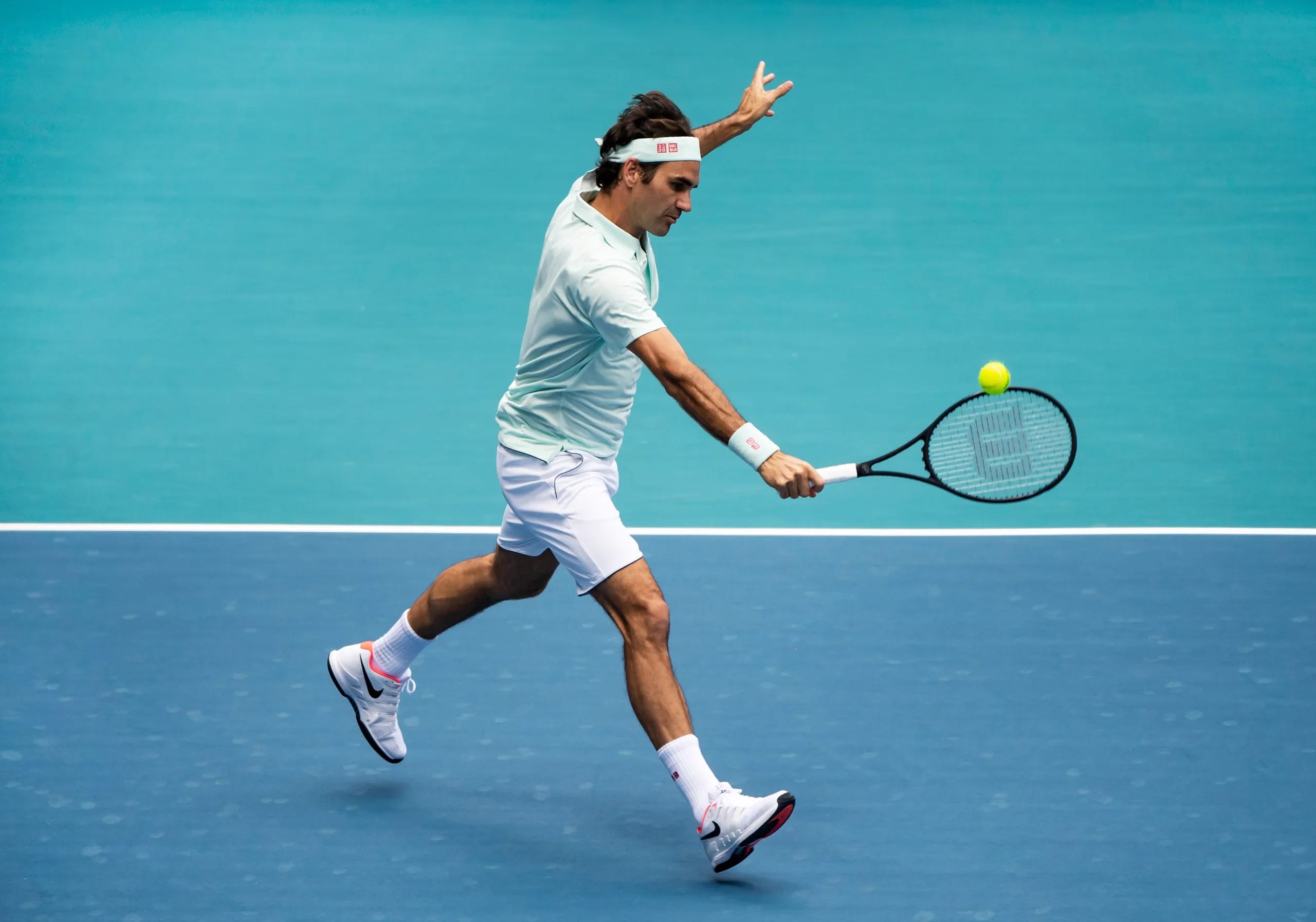
Roger Federer slept twelve hours a day during the tennis season. LeBron James has consistently prioritised ten. Usain Bolt structured his entire daily schedule around sleep windows. These figures reflect the extreme recovery demands of elite athletic training — the hours are higher than most people need because the physical load demands it. But the principle scales. These are data points from some of the most optimised performance environments on the planet, where every variable is scrutinised, every marginal gain competed for, and sleep keeps appearing at the top of the stack.
The lesson is not that founders should sleep twelve hours. It is that the highest-performing systems in the world treat sleep as a performance input, not a recovery afterthought.
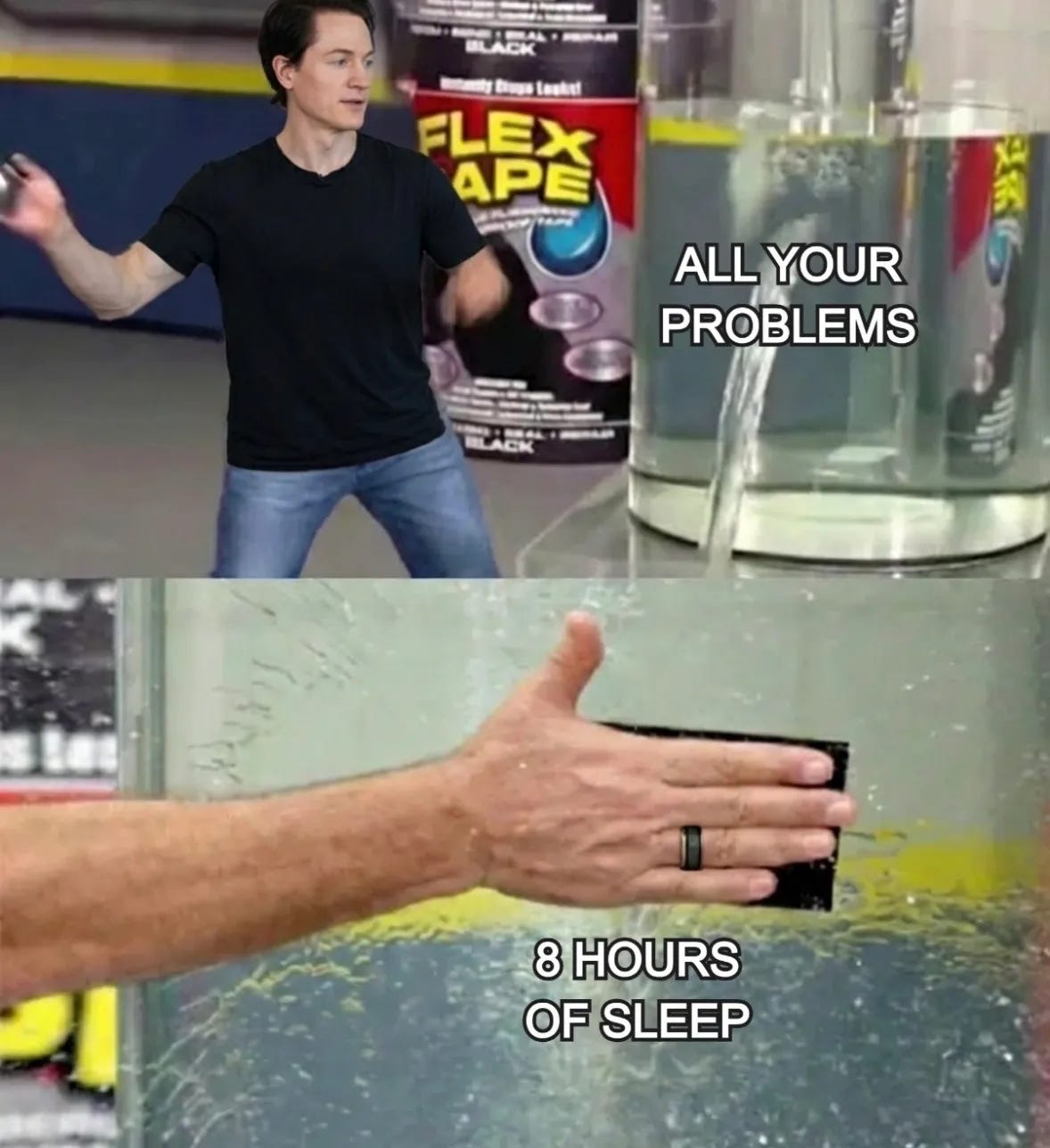
The most effective performance intervention available to any athlete, founder, or high-performer costs nothing, requires no prescription, and is almost universally undervalued.
Sleep.
Recovery is invisible until it’s not
In elite sport, sleep is not framed as wellness or self-care. It is programmed. It sits underneath strength work, tactical preparation, skill development, and psychology — treated as a performance variable with direct impact on output, not an optional supplement to the real work. In startups, by contrast, sleep is routinely relegated to lifestyle advice. Something you optimise once the important decisions have been made. That mismatch is worth examining, because both environments demand the same thing from the people inside them: Sustained high performance under pressure.
We tend to romanticise intensity. Early mornings, late nights, the grind, the 996 hustle culture. Hard work is obviously integral to building anything extraordinary and lasting. Biologically and cognitively, however, intensity only pays off if the system is given space to adapt. You do not get fitter during training; you get fitter after training. You do not become sharper during the sprint; you become sharper between sprints.
That’s the trap with sleep loss. It doesn’t just make you slower — it makes you less aware of how compromised you are. A landmark 2003 study by Van Dongen et al. in the journal Sleep found that restricting sleep to six hours per night for two weeks produced cognitive deficits equivalent to two full nights of total sleep deprivation, and crucially… subjects consistently underestimated their own impairment. The number itself matters less than most people assume; quality and architecture matter as much as duration, and six hours of consolidated sleep can outperform eight hours of fragmented rest. But the miscalibration is the real culprit. You keep pushing because you feel functional, even as your decision-making quietly degrades.
It’s also worth distinguishing what sleep is doing. Slow-wave deep sleep is where physical repair and memory consolidation happen (i.e. where the body processes the load of the day and earns the right to perform again). REM sleep is where the cognitive work gets done: emotional regulation, creative pattern recognition, and the ability to connect disparate ideas are consolidated during REM. For founders, that second function is often the bottleneck. The functions sleep deprivation most visibly degrades — decision quality, creative thinking, and emotional regulation under pressure — are precisely what REM sleep exists to restore. Without it, you’re tired and operating with a structurally different cognitive profile.
In high-performance environments, effort is rarely the constraint. Capacity is.
The question is never just “Did you work hard?”
It’s “Are you ready to go again?”
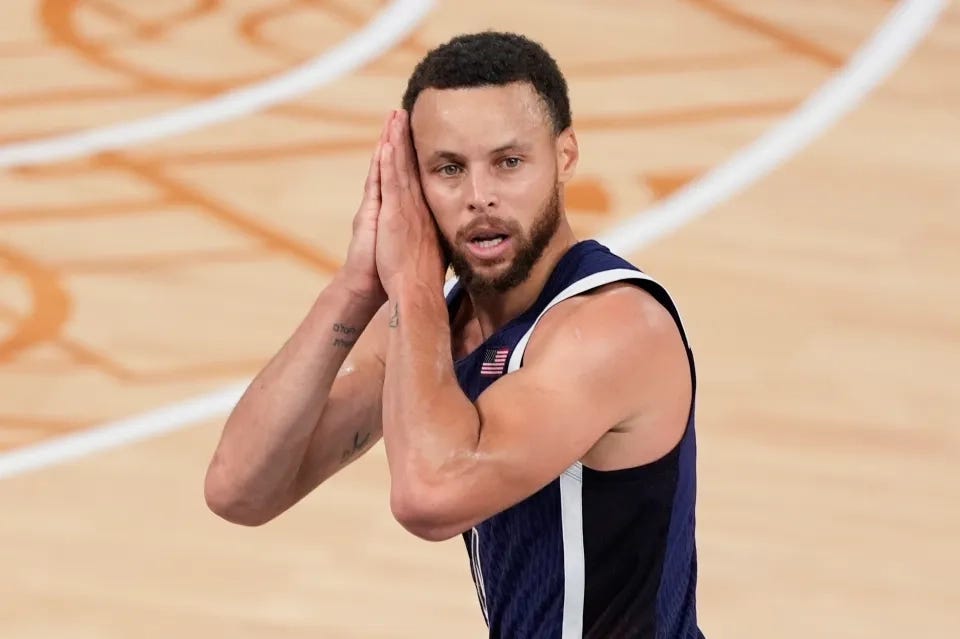
Founders face the same equation, just with a different injury profile. They pull attention instead of hamstrings, accumulate cognitive fatigue rather than muscular damage, and the failure mode is subtle. Pattern recognition dulls, risk calibration shifts, patience shortens. Nothing collapses overnight, but leadership just becomes a little less sharp, a little less considered, and a little more reactive — until that becomes the new baseline.
The bottom line is that sleep is not a perk, but operational infrastructure — one that determines the quality of decisions, the tone of leadership, and the sustainability of intensity. Undermine it consistently, and you are borrowing performance from the future at compounding interest.
Technology is catching up
The category is moving from passive measurement toward active intervention. From generic dashboards to tighter feedback loops that facilitate actual behaviour change. The global sleep tech market was valued at around $25 billion in 2024 and is projected to exceed $100 billion by 2032, growing at close to 18% annually — one of the fastest growth rates in consumer health. That trajectory is driven by a fundamental shift in how people are beginning to think about sleep. As a powerful variable to be optimised for a better, longer, and high-functioning life.
The insight driving the category is that most performance errors are not caused by ignorance, but by miscalibration. A strong recovery tool therefore does not make you more intense. It acts as a 24/7 personal assistant, making you more aware, and helping you implement the right habits.
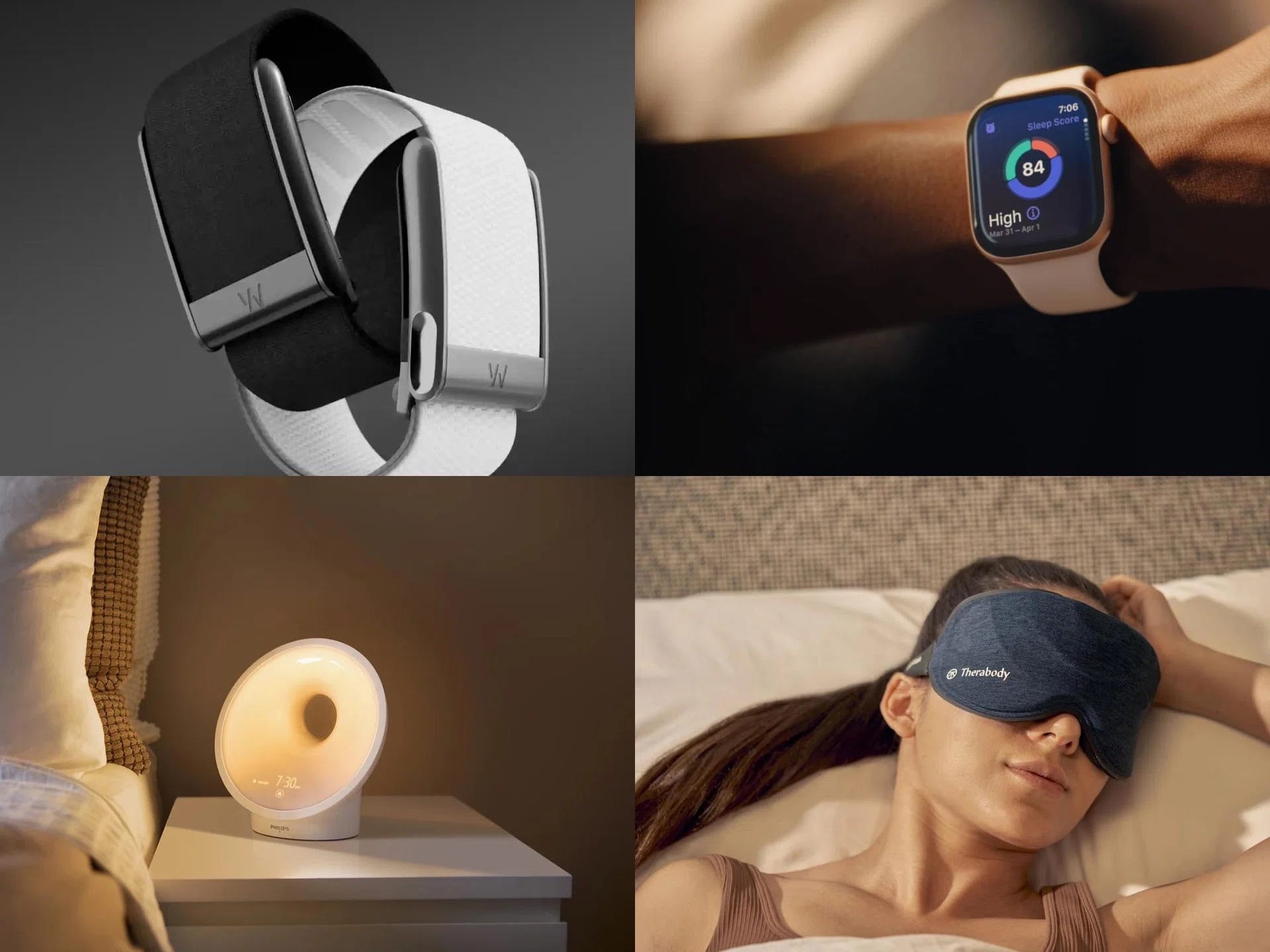
Wearables such as Oura and Ultrahuman are good examples of this. Their core contribution is the calibration of the vast amounts of data they collect. They take an internal, subjective state (”I feel fine”) and overlay it with objective constraint (”Your recovery is suppressed”). More importantly, these platforms are embedding sleep inside a holistic behavioural context. Sleep sits downstream from decisions made throughout the day — meal timing, glucose volatility, alcohol intake, stress load, training intensity. By tightening the causal loop between behaviour and consequence, the conversation shifts from “How did I sleep?” to “What did yesterday do to my sleep?” That personalised approach accelerates learning in a way that generic advice can’t.
Eight Sleep reframes the problem at a more fundamental level. Much of sleep optimisation has been positioned as personal discipline. Wind down earlier, reduce screen time, manage light exposure. Eight Sleep instead changes the environment directly by heating or cooling the bed, and on advanced models even changing physical elevation to reduce snoring. Temperature regulation for instance turns out to be one of the highest-signal variables in sleep quality, with several studies finding that optimised thermal conditions significantly improved deep sleep. Rather than demanding more willpower, Eight Sleep alters the default conditions. It treats sleep not as a discipline problem but as an environment design problem. The system changes first and the behaviour change follows.
Looking beyond how much you sleep and in what conditions, a third variable these platforms are beginning to surface is circadian alignment — when you sleep relative to your biology. Chronotype varies meaningfully between individuals, and founders operating across time zones or with irregular schedules can accumulate significant circadian debt even while logging adequate hours. You can bank eight hours at the wrong point in your circadian cycle and still impair the cognitive functions you most depend on. Timing is the dimension most people never measure, and increasingly it is what the better platforms are beginning to address.
So what?
The broader takeaway is not that every founder should buy a wearable or a smart bed. Eight Sleep’s price point makes it an option for the few, not the many, and it reinforces a broader problem around access in the longevity space that deserves its own piece. The lesson is architectural. Performance is built on intensity, but not on intensity alone. Recoverability needs to be part of the equation. The goal — whether in sport or in company-building — is to design conditions where performance compounds rather than oscillates.
For startups, this means treating recovery as a serious performance variable rather than a lifestyle footnote. It means designing for average energy and low motivation, not peak adrenaline — because a system that only works on your best day is poorly engineered. It means recognising that decision quality, consistency, and clarity compound over time in ways that occasional heroic output never does. McKinsey research has found that the four leadership behaviours most associated with high-performing executive teams — results orientation, problem-solving, seeking diverse perspectives, and supporting others — all rely heavily on the prefrontal cortex, the region of the brain most severely compromised by sleep deprivation. The cost of poor sleep is not just individual impairment; it is organisational drag. And it means changing environmental defaults before reaching for discipline, because defaults scale in a way that willpower never will.
But the harder realisation is that the barrier is rarely ignorance. Most founders know sleep matters. The real obstacle is culture. Startup environments actively signal that sleeping less is a performance indicator, and that signal is rarely explicit enough to argue with directly. It lives in who sends the 2am Slack message, in what gets celebrated in all-hands, in what leadership visibly models. Augmenting the default requires changing what the organisation demonstrates, not just what it says.
Most of us tend to worship visible output. Truly elite systems are built around invisible recovery.