

Every generation gets the athletes it deserves.
Ours are not necessarily more talented. But they are more intentional about staying good.
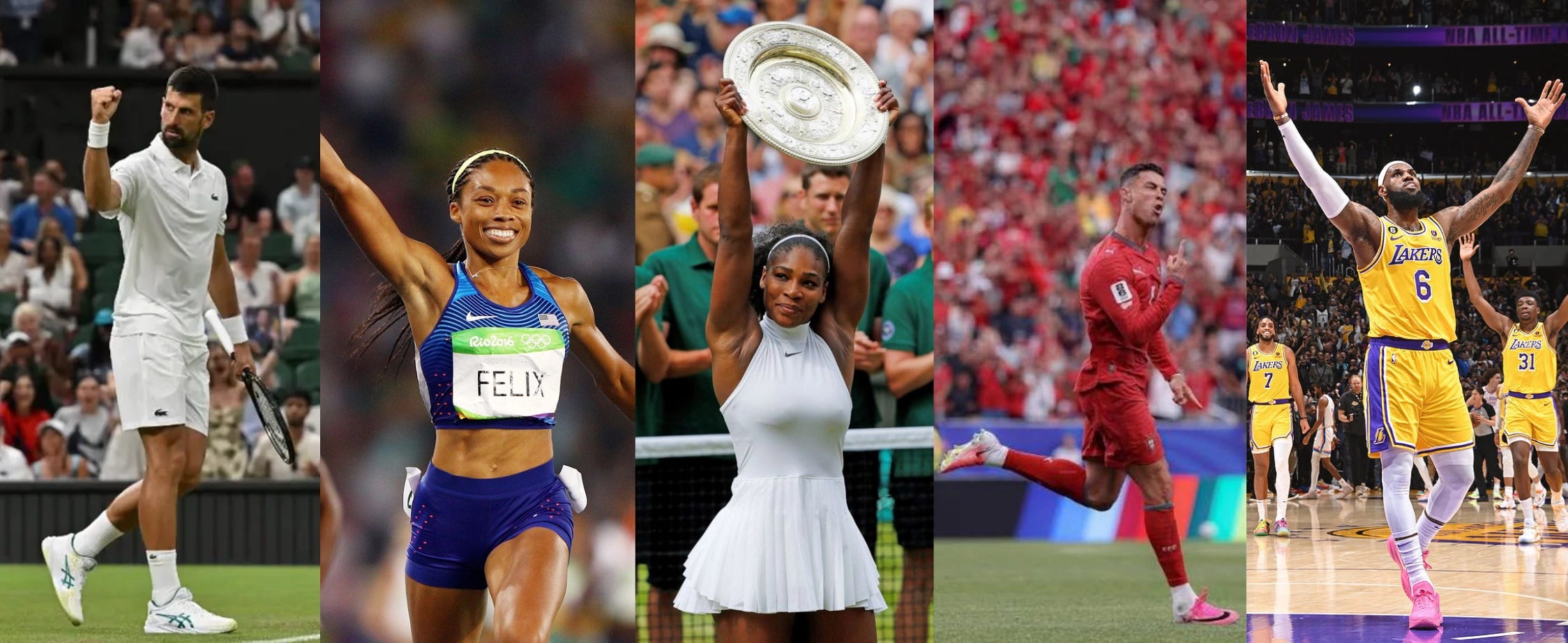
Novak Djokovic did not just extend his career; he extended his prime. Cristiano Ronaldo has turned self-maintenance into a professional discipline in its own right. LeBron James is still performing at an age where most players have either retired or reframed themselves as “experienced veterans.” Serena Williams and Allyson Felix have shown the same infrastructure can survive being reset entirely — by childbirth, by injury, by four years away from competition — and still come back for more.
This is what deliberate consistency sustained over decades looks like.
That is why longevity has become such an interesting category in performance. Not because everyone (aka Bryan Johnson) suddenly wants to become immortal. But because longevity is what happens when you start treating the body like an adaptive system that requires maintenance, feedback, and intelligent constraint.
Many people view longevity as extending life at all costs. It’s not. I believe longevity to be about extending capability — staying sharp, strong, and effective for longer than the average trajectory would suggest is possible. Therefore, lifespan (how long we live) always has to go hand in hand with healthspan (the number of years we live in good health).
Genius Without a System
Before diving into the greats of this generation, let’s not forget that none of this longevity talk mattered to the athletes of a previous era, and two of the greatest prove exactly how little it mattered. Well… until it did.
Diego Maradona won the 1986 World Cup almost single-HANDEDly (if you know you know), carrying a modest Argentina squad through a seven-match tournament of individual brilliance that owed nothing to sports science, sleep architecture, or a full-time nutritionist. Johan Cruyff redefined what football could look like tactically while also smoking through half-time team talks, a habit so embedded in his identity that opposing benches could smell him coming. Neither man built infrastructure around his talent. Neither seemed to think he needed to.
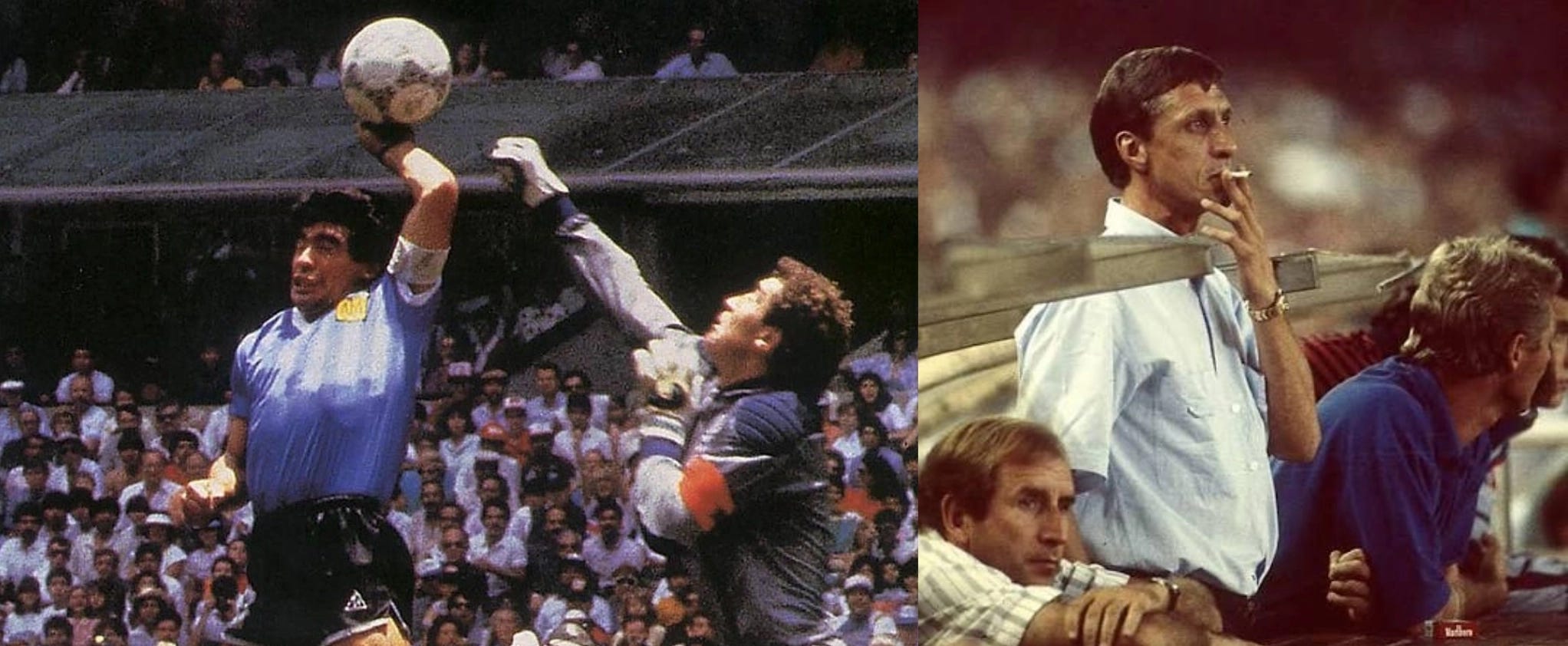
However, the bill came due later, and it was steep. Maradona, who by the looks of it would have enjoyed today’s Enhanced Games, failed a drug test for cocaine in 1991 and was banned from playing for fifteen months. This marked the start of a decline that shortened his career and, eventually, his life; he died in 2020 at 60, following decades of addiction. Cruyff smoked through his playing career and into his time as Barcelona’s coach, then needed emergency double bypass surgery in 1991 to survive it. He quit that day and fronted an anti-smoking campaign afterwards. Unfortunately, he still died of lung cancer in 2016, aged 68. Both men reshaped their sport permanently, but neither got the second act that this generation’s greats are still writing.
This is not an argument that talent needs discipline to matter, or that Maradona and Cruyff would have been greater with a better spreadsheet. In fact, their fast life and lack of spreadsheets probably gave them unlimited aura.
It is more so a comment on what each model can promise. Genius without infrastructure can still produce the best years anyone has ever seen. What it cannot promise is more of them. The current generation is not necessarily more gifted than the last one, it has simply worked out how to keep the gift alive for longer.
Discipline by Design
In discussions, longevity gets framed as a protocol — a stack of supplements, a dashboard of biomarkers, a perfectly optimised diet — as if the right combination of inputs guarantees the outcome. But athletes who actually last do not win because of one magic variable. They win because they construct environments where the right behaviours happen by default, and the destructive ones are engineered out. One relies on fluctuating motivation. The other relies on compounding infrastructure.
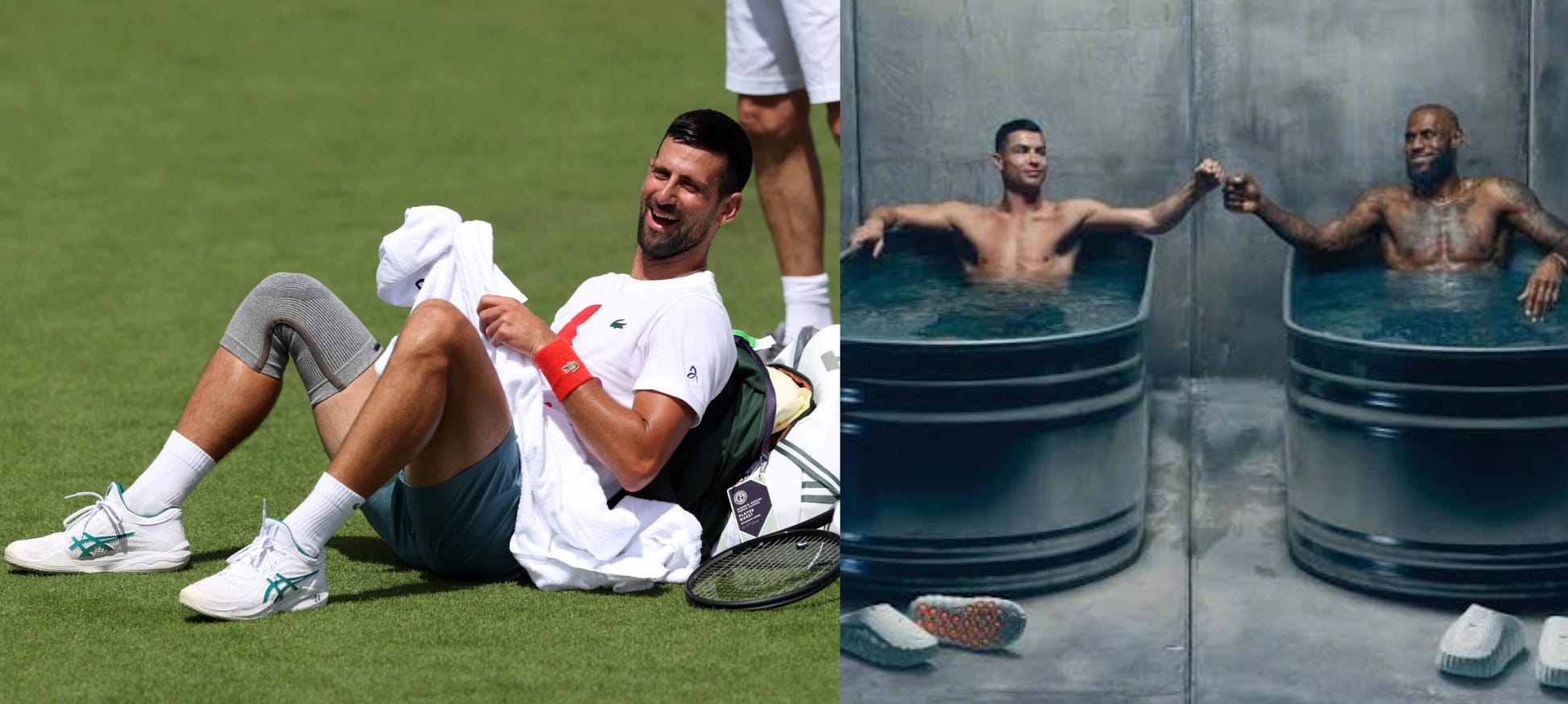
Djokovic and Ronaldo show what that infrastructure looks like in practice, built from opposite directions. With Djokovic, the obvious story is titles — twenty-four Grand Slams, the most in men’s tennis history, and even with Alcaraz and Sinner playing like gods, you wouldn’t put it past him to win number 25 at the age of 39. Djokovic reframed inflammation, stress, sleep, and nutrition as competitive variables rather than wellness footnotes, then built his career around subtraction through a plant-based diet, gluten elimination, and breathwork.
Ronaldo arrived at the same principle from the opposite direction: automation rather than subtraction. Recovery is scheduled with the rigour of training. Nutrition is close to mechanical. Sleep is structured around multiple cycles rather than one nightly block. Every decision that depends on motivation is one that might not survive contact with pressure, so he has engineered motivation out of the equation entirely.
LeBron adds a third dimension to the same principle: decline is rarely one dramatic break. It is accumulation — micro-injuries that never fully heal, travel fatigue compounding across an 82-game season, chronic sleep debt eroding reaction time. None of it ends a career alone, but the accumulation is why most players are done by 35. LeBron has built an obsessive buffer against that accumulation instead, reportedly to the tune of a million dollars a year on cryotherapy, hyperbaric chambers, a full-time nutritionist, and meticulous sleep tracking. He has stayed relevant “simply” by being harder to break than everyone else.
Djokovic, Ronaldo, and LeBron each used different mechanisms but very much with the same outcome in mind, and none of them are relying solely on willpower to show up.
Comebacks at the Highest Level
Serena Williams and Allyson Felix prove the same infrastructure has to survive the body resetting itself entirely, as they refused to choose between their careers and having a family. They’ve shown that you can have both.
Williams won the 2017 Australian Open around eight weeks pregnant, then delivered Olympia by emergency Caesarean that September (an ordeal complicated by a pulmonary embolism that left her bedridden for six weeks).
She already returned to the tour within a year, reaching four grand slam finals and winning the 2020 Auckland Open before eventually retiring in 2022. The durability behind her recent 2026 Wimbledon return was as much metabolic as it was physical. After her second pregnancy left her blood sugar and joints in worse shape than at any point in her career, she started wearing a continuous glucose monitor to see in real time how food, sleep, and stress moved her numbers, and began taking a GLP-1 medication that brought her blood sugar back to a normal range and took off more than thirty pounds. Four years after what looked like a final retirement, she stepped back onto Centre Court at 44 to play Wimbledon singles for the first time since 2022, taking a set off a player less than half her age before finally losing in three. Age did ultimately matter… but what a legend!
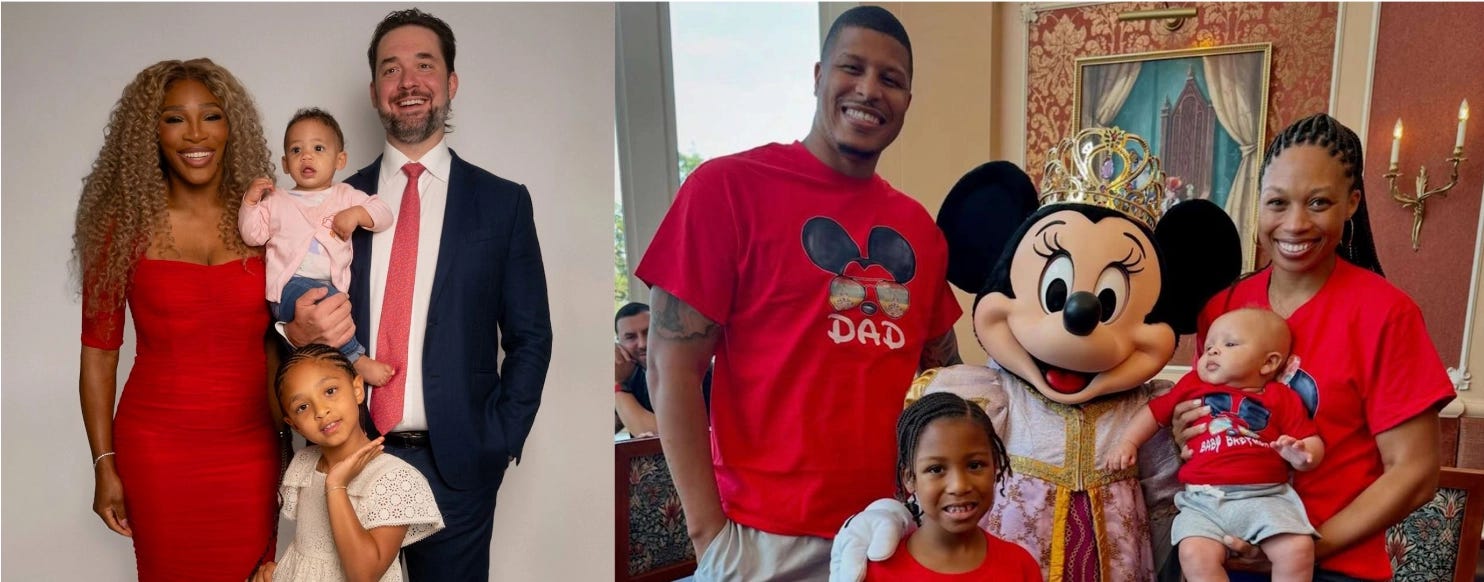
Felix’s athletic reset came from an emergency Caesarean at 32 weeks, brought on by severe pre-eclampsia that threatened her life alongside her daughter’s. She returned to win Olympic gold in Tokyo and became the most decorated athlete in US track and field history, in large part by treating recovery as seriously as training, through consistent sleep, daily soft-tissue work, and a rule of progressing only once pain-free rather than on a fixed calendar. That discipline once meant choosing months of pool-based rehab over surgery for partially torn ankle ligaments rather than risk a shortcut back. Now 40, she has announced a second comeback titled “Project Six”: a bid to make the 2028 Los Angeles Games her sixth Olympics, which would make her the first American track and field athlete ever to reach that number.
Neither treated motherhood, or age, as a career interruption to recover from. They’ve shown tremendous durability, grit, and patience — rebuilding on the body’s timeline instead of the ego’s, and coming back only once ready rather than as soon as possible.
The Founder Translation
Every part of this translates to startups. Founders are not elite athletes, but their constraints are still biological, and the companies that last are not the ones that move fastest through a single hype cycle or bubble. They are the ones built to survive the next one, and the one after that.
Startups accumulate their own version of chronic inflammation: the shortcut that seemed harmless at the time, the process nobody owns because everyone assumed someone else would, the technical debt quietly compounding in the background. None of it kills a company on its own; it just makes every subsequent decision slightly worse.
You cannot outwork biology indefinitely. It collects what it is owed whether or not that is convenient — showing up as reduced clarity in a critical decision, or a cultural tone set by exhaustion that quietly becomes how the team works.
Longevity, for a founder, means staying sharp long enough for compounding to matter. Strategy, relationships, and reputation all compound, but none of it does if the operator, or the company, burns out first.
A final thought. None of this means optimising everything, all the time, at all costs. Drinks at the pub with friends, a greasy burger, or a fat milkshake are not failures of the system. They are very much part of it.
Although it can often come across that way, joy is not the enemy of longevity. Chronic joylessness probably is though. The athletes above did not build systems in order to live less; they built them in order to live and perform more fully, for longer. The goal is a full life worth sustaining, not just a fit body you’ve miserably managed into old age.
Hi Momentous. I couldnt find a way to contact you so here it is. I came across your launch of Momentous and your focus on Sports Tech, Wellbeing and Human Potential immediately caught my attention.
I’m Yoav, an 18-year-old founder from Cyprus. I built Liftly myself, a consumer fitness app that has reached 50K+ users in ~3 months, with 500+ new users/day, $4.4K revenue last month and a 4.9★ App Store rating.
We’re now building the creator marketplace on top of that existing distribution, allowing fitness creators to sell programs directly to users through Liftly.
I saw your post saying you’re looking to connect with founders building in health, sports and consumer wellness, so I figured I had to reach out.
Would you be open to taking a look at the deck / doing a quick 15-minute pitch?
Here's our email: support@liftlygym.com
Best,
Yoav
"Startups accumulate their own version of chronic inflammation."
This is such a strong insight. Most founders can spot shortcuts in hindsight, but rarely does one spot it in the moment when it's quietly compounding. How do you spot inflammation in a company before the bill comes due? Is there a framework you use?